

When a water heater begins leaking onto your basement slab, sticker shock and confusion over options often follow. Understanding local pricing factors—including Connecticut building code requirements, venting modifications, and fuel sources—helps you evaluate quotes with complete confidence.
Typical Water Heater Replacement Costs in Connecticut
Published regional benchmarks for residential water heater replacements in Hartford County reflect turnkey costs, including removal of the old unit, permit acquisition, and installation of required safety valves:
| System Type | Typical Turnkey Installed Cost | Energy Factor / Efficiency | Expected Lifespan |
|---|---|---|---|
| Standard Atmospheric Gas Tank (40–50 gal) | $1,600 – $2,400 | 0.60 – 0.65 UEF | 8 – 12 Years |
| Power-Vent Gas Tank (40–50 gal) | $2,200 – $3,200 | 0.68 – 0.72 UEF | 10 – 12 Years |
| Hybrid Electric Heat Pump Tank | $2,500 – $4,200 | 3.30 – 3.75 UEF | 10 – 15 Years |
| Condensing On-Demand Tankless | $3,200 – $5,800 | 0.92 – 0.96 UEF | 20+ Years |
| Indirect Water Heater (Boiler-Fired) | $2,400 – $4,000 | System Dependent | 15 – 25 Years |
What Drives the Price of a Replacement in Your Home?
The price on your written estimate is determined by specific technical conditions inside your basement or utility room:
- Venting Upgrades: If an older masonry chimney is deteriorating or unlined, switching to a power-vent or direct-vent tankless unit requires running new schedule-40 PVC or polypropylene exhaust pipe through an exterior rim joist.
- Thermal Expansion Tank Installation: Connecticut plumbing codes mandate expansion tanks on closed domestic water systems (systems equipped with check valves or pressure-reducing valves). Adding a code-compliant expansion tank adds $150 to $300 in parts and labor.
- Gas Supply Line Capacity: Converting to an on-demand tankless heater often requires upgrading existing 1/2-inch gas piping to dedicated 3/4-inch or 1-inch lines to supply 150,000 to 199,000 BTUs during peak draw.
- Town Permitting Fees: Local municipal building departments in Hartford County charge between $50 and $150 for residential plumbing permits.
Need Urgent Plumbing Assistance in Greater Hartford?
Connect with an independent local pro ready to dispatch across Glastonbury, East Hartford, Manchester, and surrounding towns. Free to call with upfront written estimates.
Rebates & Incentives Through Energize Connecticut
Homeowners investing in high-efficiency equipment can offset upfront installation costs. Energize Connecticut (energizect.com), funded by Eversource and UI customers, frequently offers instant rebates of $750 to $1,000 on qualifying hybrid heat pump water heaters, plus federal Inflation Reduction Act tax credits of up to 30% of project costs.
Detailed Cost Breakdown: Equipment, Labor & Town Permits
Understanding water heater replacement costs helps homeowners budget realistically when an aging tank begins leaking. In Hartford County, total replacement costs are shaped by three core components: the physical heating unit, licensed mechanical installation labor, and town municipal permits. Standard atmospheric 40- or 50-gallon gas storage tanks represent the most economical replacement option. Upgrading to a power-vent model (which exhausts through side-wall PVC when a chimney is decommissioned) or a high-efficiency tankless on-demand system involves additional venting, gas line re-sizing, and electrical modifications that increase project scope.
Connecticut Building Code Upgrades That Influence Installation Costs
When replacing a water heater, Connecticut building codes mandate several safety upgrades that may not have been present on your existing 15-year-old unit:
Energize Connecticut Utility Rebates & Federal Tax Credits
Connecticut homeowners can offset upfront equipment costs by leveraging state clean-energy rebates funded through Energize Connecticut. Qualifying hybrid electric heat pump water heaters qualify for electric utility rebates up to $750 or more, plus federal clean energy tax credits under the Inflation Reduction Act. These hybrid units use heat pump technology to extract ambient warmth from basement air, reducing annual water heating electricity consumption by up to 70 percent while naturally dehumidifying damp New England cellars.
Electrical Panel Capacity When Upgrading to Hybrid Heat Pump Heaters
Homeowners transitioning from natural gas or oil-fired water heaters to energy-efficient hybrid electric heat pump units must evaluate their main electrical service panel. Hybrid heat pump water heaters operate on 240 volts and typically require a dedicated 30-amp dual-pole circuit breaker wired with 10-gauge non-metallic copper cable (10/2 NM Romex). If your older home in Glastonbury or Manchester currently has a 100-amp electrical panel that is near maximum capacity, an independent contractor or licensed electrician may need to install a subpanel or upgrade electrical service to accommodate the new clean-energy appliance.
Factoring in these mechanical and electrical modifications ahead of time prevents unexpected budget surprises and ensures your installation meets all local town electrical and plumbing inspection codes.
Evaluating the Long-Term Return on Investment for High-Efficiency Systems
While an advanced hybrid heat pump or tankless water heater carries a higher initial installation invoice than a baseline atmospheric gas unit, the operational savings over a 15- to 20-year lifespan are substantial. Standard electric storage tanks can cost $500 to $800 annually in electricity to keep 50 gallons of water continuously hot. In contrast, an Energy Star qualified hybrid unit operates for approximately $150 to $200 per year, yielding cumulative energy savings of $4,000 to $6,000 over its operational life. When combined with Energize Connecticut utility rebates, the payback window for upgrading often drops below four years.
Expert Field Insight: Tankless vs. Hybrid Heat Pump in Cold Connecticut Basements
When deciding between an on-demand tankless system and a hybrid electric heat pump water heater, Greater Hartford homeowners must consider winter ground water thermodynamics. During New England winters, municipal reservoir water entering through basement foundations drops to 38°F–42°F. To deliver a 120°F shower, a water heater must achieve an aggressive 78°F temperature rise. Under these harsh winter conditions, a standard 199,000 BTU gas tankless heater’s maximum flow rate drops from its summer peak of 9.0 GPM down to approximately 4.5 to 5.0 GPM. While plenty for two simultaneous fixtures, running three showers and a dishwasher concurrently can cause noticeable water temperature drops unless an ultra-high-output unit is installed.
Conversely, a hybrid electric heat pump water heater (such as a 65- or 80-gallon storage model) maintains a deep thermal reservoir of preheated water. The heat pump absorbs ambient warmth from the surrounding basement air, producing cool, dehumidified exhaust air. In damp Connecticut fieldstone cellars, this dehumidification effect helps eliminate summer mustiness and prevents basement mold. However, in an unheated winter basement that hovers around 45°F, the heat pump may automatically cycle over to its electric resistance heating elements during periods of rapid household demand, slightly raising winter operating costs.
Chimney Flue Condensation vs. Side-Wall Power-Venting Upgrades
Many mid-century homes across Glastonbury, Wethersfield, and East Hartford feature brick chimneys with terracotta clay flues shared between a central heating boiler and an atmospheric water heater. When homeowners upgrade their primary heating system to a high-efficiency condensing boiler that vents directly through the wall, the water heater is left as the "orphan" appliance venting into a massive, cold masonry chimney. Because the warm exhaust gases from a small 40,000 BTU atmospheric water heater cannot properly heat the large cold chimney, moisture in the flue gas condenses on the cold bricks, forming acidic liquid that erodes chimney mortar joints.
To solve this code hazard under the Connecticut State Building Code, homeowners face two choices: pay $1,500 to $2,500 to install a corrugated stainless-steel chimney liner, or upgrade to a power-vent water heater that exhausts directly through the exterior rim joist with two-inch PVC pipe. In most cases, choosing the power-vent unit proves more cost-effective while eliminating chimney draft hazards entirely.
Hartford County Permitting & Final Mechanical Inspection Checklist
Municipal building departments across Hartford County—including the Glastonbury Building Division at 2155 Main Street and the Manchester Building Department at 494 Main Street—strictly enforce residential plumbing permit requirements. When an independent contractor pulls a permit and schedules the municipal inspection, the town inspector verifies several mandatory safety items:
- Expansion Tank Pre-Charge Calibration: The expansion tank internal air bladder must be pumped up to precisely match the static municipal water pressure entering the basement (typically 55 to 65 PSI).
- T&P Relief Valve Discharge Line: Must be rigid copper or CPVC routed downward without kinks or shutoffs, terminating within six inches of the slab floor.
- Sediment Drip Leg Nipple: A vertical three-inch capped pipe nipple installed immediately ahead of the gas control valve to capture particulate debris before it fouls the burner pilot.
- Combustion Air Ventilation: Verifying adequate cubic feet of air volume in the mechanical room or dedicated louvered combustion ducts to prevent carbon monoxide backdrafting.
Visual Field Reference & Diagnostic Guides
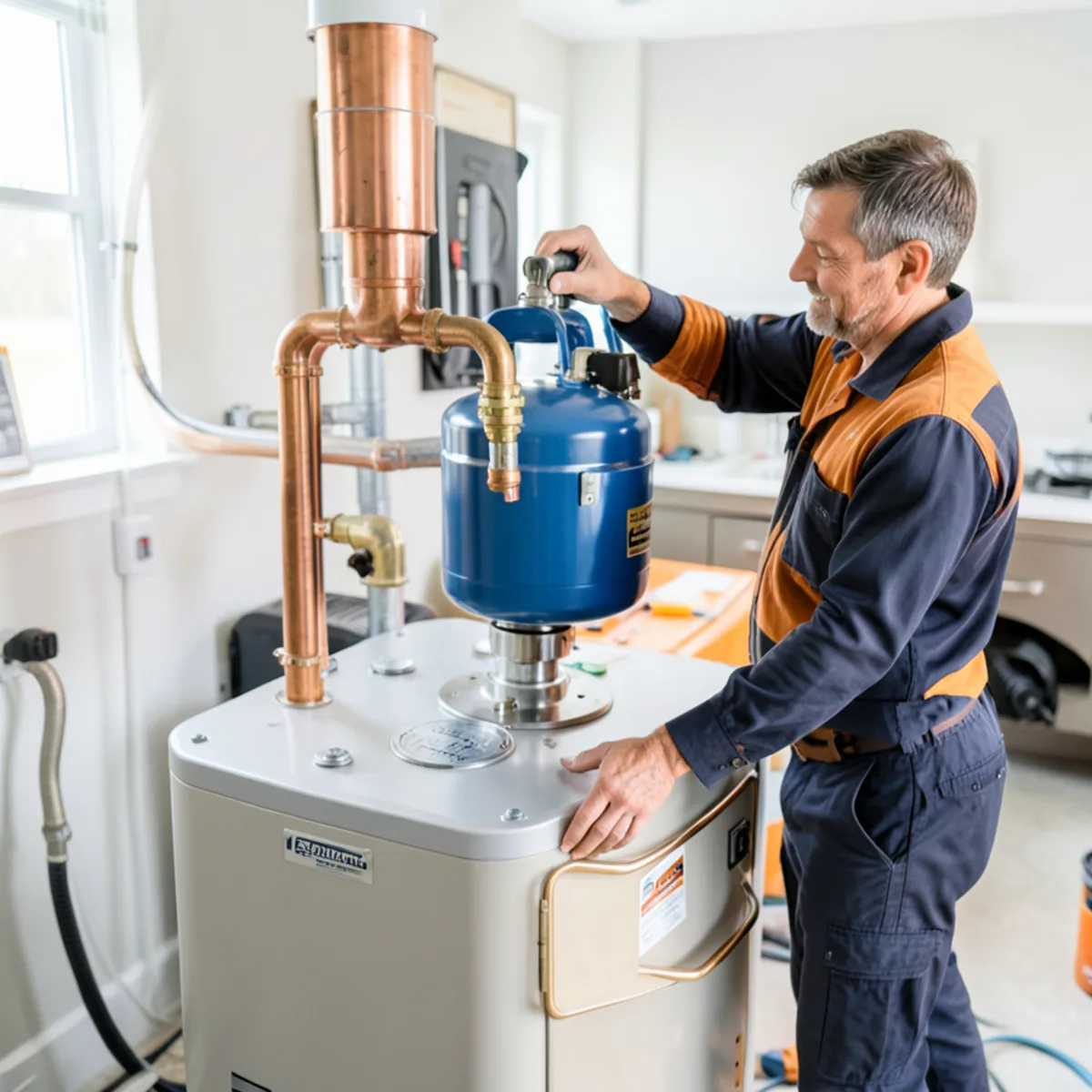
Thermal expansion tank connected with brass tee fitting above water heater
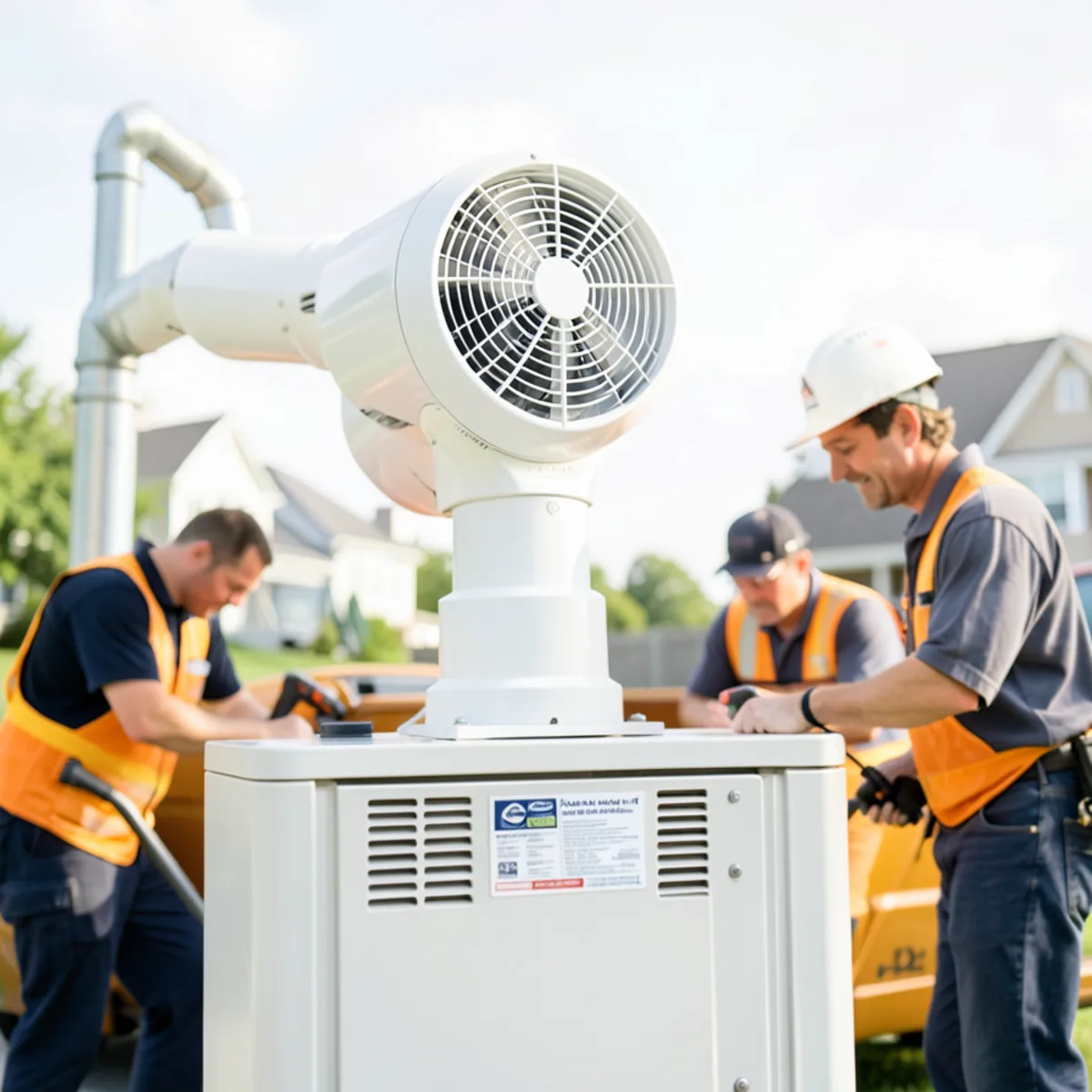
White PVC direct vent pipe exiting basement wall from power vent heater
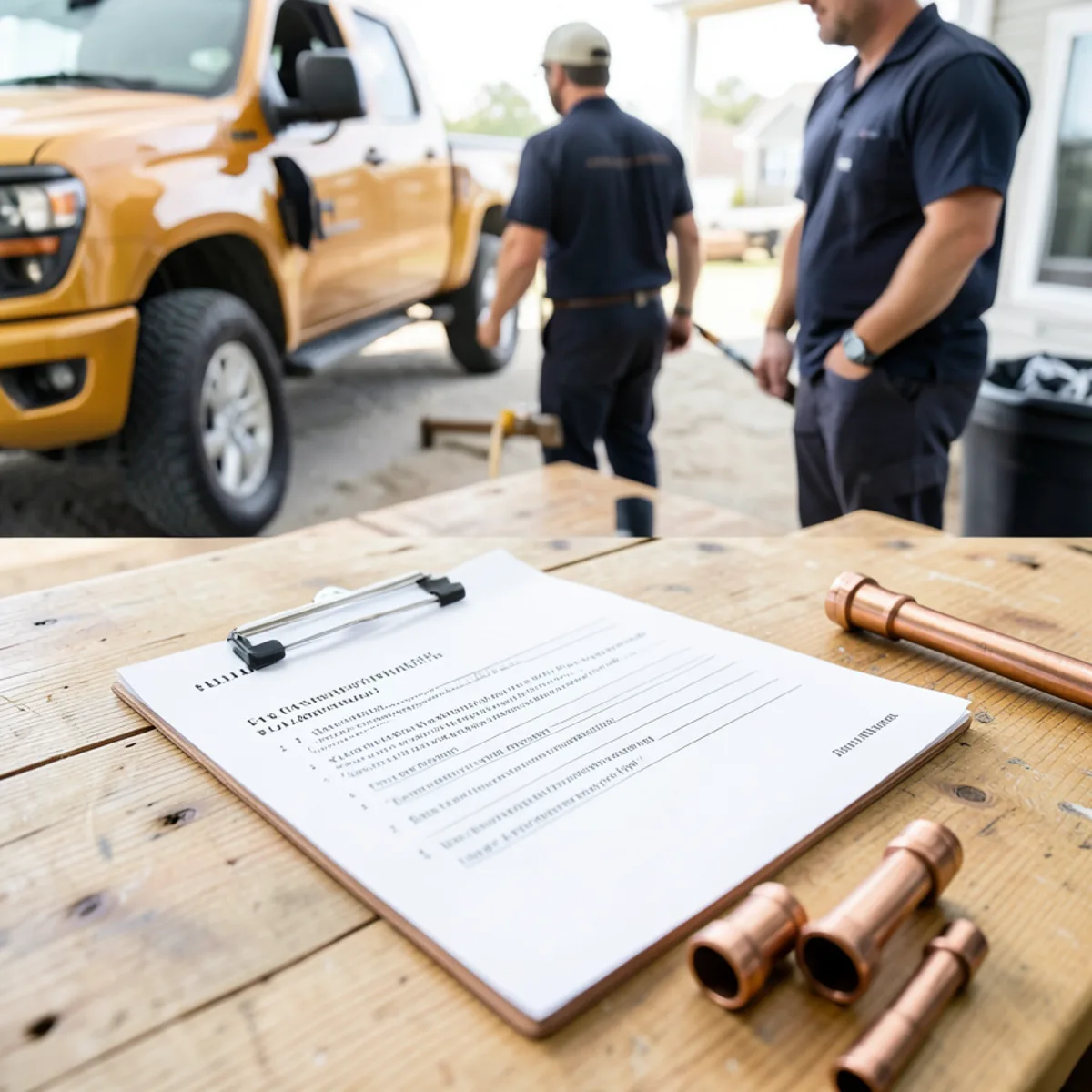
Contractor written line item plumbing quote on clipboard
Cited References & Regulatory Authorities
Article FAQs
Direct answers to common questions addressed in this guide.
When cold municipal water is heated, it expands in volume by roughly 2%. In closed plumbing systems with backflow preventers, this extra volume has nowhere to go, creating intense pressure spikes that stress faucet cartridges, washing machine valves, and the water heater itself. An expansion tank absorbs this pressure safely.