
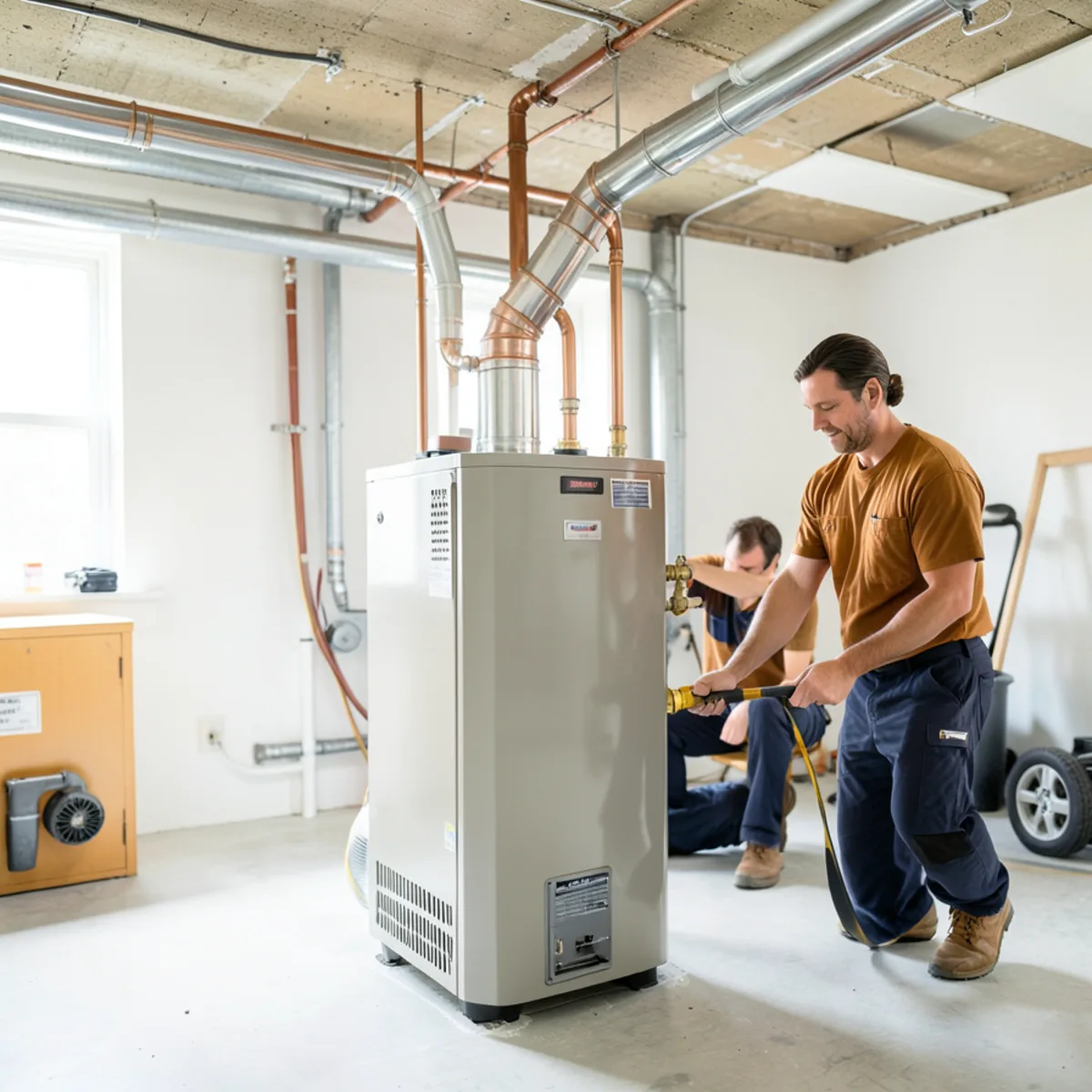
Most residential storage tank water heaters have an engineered service life of 8 to 12 years. If your unit has reached its second decade and begins weeping water from the base seams, repairs are no longer feasible—replacing the unit promptly prevents catastrophic tank rupture and basement flooding.
Repair vs Replacement: How to Evaluate Your System
Independent contractors assess whether an economical component repair makes sense or if investing in a replacement is the smarter financial choice:
Water Heating Options for Greater Hartford Homes
Modern replacements offer substantial improvements in energy efficiency, operating recovery, and space utilization:
| System Type | Energy Source | Best Fit | Key Advantages |
|---|---|---|---|
| Atmospheric Gas Tank | Natural Gas / Propane | Existing chimney venting; standard budget | Lowest upfront cost; reliable operation without electricity. |
| Power-Vent Gas Tank | Natural Gas / Propane | Decommissioned chimneys; finished spaces | Side-wall PVC venting; higher energy efficiency and recovery rate. |
| Hybrid Electric Heat Pump | Electricity (240V) | Unfinished basements; high electric bills | Uses 70% less energy than standard electric; dehumidifies Connecticut basements. |
| On-Demand Tankless | Natural Gas / Propane | Large families; compact mechanical spaces | Endless hot water; 20+ year lifespan; mounts neatly on a wall. |
Need Urgent Plumbing Assistance in Greater Hartford?
Connect with an independent local pro ready to dispatch across Glastonbury, East Hartford, Manchester, and surrounding towns. Free to call with upfront written estimates.
Combating Hard Water Sediment & Sacrificial Anode Rod Dynamics
Across Hartford County, municipal and private well waters contain dissolved calcium carbonate and magnesium ions. When water is heated inside a storage tank above 130°F, these minerals precipitate out of solution, falling to the bottom of the tank as chalky mineral sediment. Over 5 to 7 years, this sediment bed can accumulate several inches deep, insulating the water from gas burners or burying lower electric heating elements.
Equally critical is the sacrificial anode rod—a solid core of magnesium or aluminum suspended inside the tank. The rod protects the steel tank from rust through galvanic sacrifice; electric potentials cause the water to corrode the anode rod rather than the steel tank shell. In well homes with sulfur odors, contractors replace standard magnesium rods with aluminum-zinc alloy rods to eliminate hydrogen sulfide gas smell without compromising corrosion defense. Flushing sediment annually through the brass tank drain valve extends tank longevity by years.
Connecticut Building Code Mandates for Water Heater Swaps
Under the 2022 Connecticut State Building Code, replacing a residential water heater involves strict safety compliance measures. When an independent pro replaces your water heating unit, the installation must adhere to specific mechanical safeguards:
- Thermal Expansion Tank Installation: When a municipal water meter incorporates a dual check valve or backflow preventer, the home becomes a "closed plumbing system." As water heats, it expands. Without a properly sized potable expansion tank pre-charged to match incoming street pressure, thermal expansion spikes line pressure above 100 PSI, causing premature tank rupture and plumbing joint leaks.
- Temperature & Pressure (T&P) Relief Valve Discharge Line: Code requires an ASME-rated 150 PSI / 210°F relief valve with an unthreaded, rigid copper or CPVC discharge pipe terminating within 6 inches of the floor or into an approved drain receptacle.
- Gas Supply Drip Leg (Sediment Trap): Gas-fired water heaters require a downward-pointing nipple and cap directly preceding the control valve inlet to capture pipeline scale and moisture before it contaminates the sensitive gas burner assembly.
- Combustion Air & Flue Draft Verification: Atmospheric gas units venting into shared masonry chimneys require draft testing to guarantee that toxic carbon monoxide exhausts safely outdoors without backdrafting into basement living quarters.
The 6-Step Turnkey Water Heater Replacement Protocol
Replacing an aging water heater involves precise mechanical disconnect, staging, and installation protocols completed by licensed professionals:
- 1Pre-Installation Sizing & Fuel Audit: The technician verifies home peak-hour hot water demand, inspects existing gas supply line sizing (half-inch vs three-quarter-inch) or 240V electrical breaker ampacity, and checks chimney draft or exterior sidewall clearance.
- 2Complete System Isolation & Tank Draining: The pro shuts off the cold water feed, disconnects gas or electrical service, connects a commercial drain hose to the brass spigot, and pumps out 40 to 50 gallons of sediment-laden hot water into a safe basement drainage receptacle.
- 3Safe Decommissioning & Eco-Friendly Removal: Flue pipes, electrical whips, and dielectric unions are disconnected. The old water heater is wheeled out on an appliance dolly for responsible metal recycling per Connecticut environmental guidelines.
- 4Platform Staging & Seismic Leveling: The new high-efficiency water heater is set on an approved non-combustible base, leveled with shims, and fitted with a code-compliant aluminum drain pan routed to a daylight gravity drain where required.
- 5Code Upgrades & Mechanical Hookups: New full-port brass quarter-turn ball valves, thermal expansion tank pre-charged to municipal street pressure, gas sediment drip leg, and rigid copper T&P discharge pipe are assembled and soap-bubble leak-tested.
- 6Commissioning, Permitting & Rebate Processing: The tank is completely flooded with water to purge all air before energizing heating elements. The technician calibrates the thermostat to 120°F, files the Town building permit, and provides documentation for Energize Connecticut utility rebates.
Local Utility Rebates in Connecticut
Homeowners investing in high-efficiency water heating equipment can take advantage of substantial energy efficiency rebates funded through Energize Connecticut. Qualifying hybrid heat pump water heaters qualify for electric utility rebates up to $750 or more, plus federal clean-energy tax credits. High-efficiency condensing gas and tankless units may qualify for natural gas incentives through Connecticut Natural Gas (CNG) or Eversource.
Indirect Water Heaters Paired with Hydronic Boilers
Throughout older colonials and Victorians in Glastonbury, West Hartford, and Manchester, home heating is frequently provided by an oil- or gas-fired cast-iron hydronic boiler. In these homes, an indirect water heater represents one of the most efficient water heating solutions available. Rather than containing its own gas burner or electric heating elements, an indirect unit utilizes a heavily insulated stainless steel storage tank equipped with an internal finned copper heat exchanger coil. Hot boiler water circulates through the internal coil, transferring heat rapidly to the surrounding domestic potable water. Because hydronic home heating boilers produce high BTU heat outputs (often 100,000 to 180,000 BTUs), indirect tanks achieve exceptional hot water recovery rates—often exceeding 200 gallons per hour. When paired with digital boiler outdoor-reset controls and prioritized domestic hot water switching relays, indirect tanks provide virtually endless hot water with minimal fuel consumption during cold New England heating seasons.
What a Written Water Heater Replacement Estimate Must Itemize
When reviewing an estimate for a replacement water heater from an independent contractor, transparent documentation protects your investment. A comprehensive estimate should clearly separate equipment specification (brand, model number, gallon capacity, energy factor rating) from mechanical installation labor. It must itemize all required code updates: installation of a thermal expansion tank pre-charged to municipal street pressure, new brass full-port quarter-turn cold water shutoff valve, new flexible gas supply connector and sediment drip leg, code-compliant rigid copper relief valve drain pipe terminating near the floor, non-combustible water heater platform stand, local town permit fees, and disposal hauling of the decommissioned water heater.
Hartford County Water Heater Pricing Benchmarks & Cost Drivers
In Glastonbury and neighboring Hartford County communities, replacing a standard 40- or 50-gallon atmospheric natural gas or electric storage water heater typically ranges between $1,475 and $2,650 for complete equipment and mechanical installation. High-efficiency power-vent units requiring motorized side-wall PVC exhaust generally range from $2,250 to $3,375. Wall-mounted tankless on-demand conversions or hybrid heat pump water heaters typically range between $3,200 and $5,800 before applying Energize Connecticut utility rebates.
Key cost variables include whether the replacement is a direct same-location swap, the need to install a thermal expansion tank or replace seized gate valves, chimney liner retrofits, electrical panel breaker upgrades for hybrid heat pumps, and local town permit fees ($15 for the first $1,000 of job value plus $10 per subsequent $1,000 in Glastonbury).
Why Connect Through Our Glastonbury Water Heater Dispatch Desk?
Hector Plumbing Solutions provides homeowners with prompt telephone access to experienced, independent water heater replacement contractors throughout Glastonbury and Greater Hartford. Key advantages include:
- Emergency Same-Day Dispatch: Fast phone routing to on-call contractors who stock replacement tanks on their service vehicles for immediate installation.
- Upfront Itemized Written Proposals: Clear written estimates detailing brand, model, energy factor, permit fees, and installation labor before any work begins.
- Full Code Compliance: Dispatched pros handle all thermal expansion tank installations, safety relief lines, and municipal building permit filings.
- Trade Credential Verification: We encourage all customers to verify independent contractor P-1 Unlimited Plumbing licenses directly on the Connecticut DCP registry at elicense.ct.gov.
Water Heater Repair & Replacement Equipment & On-Site Diagnostics
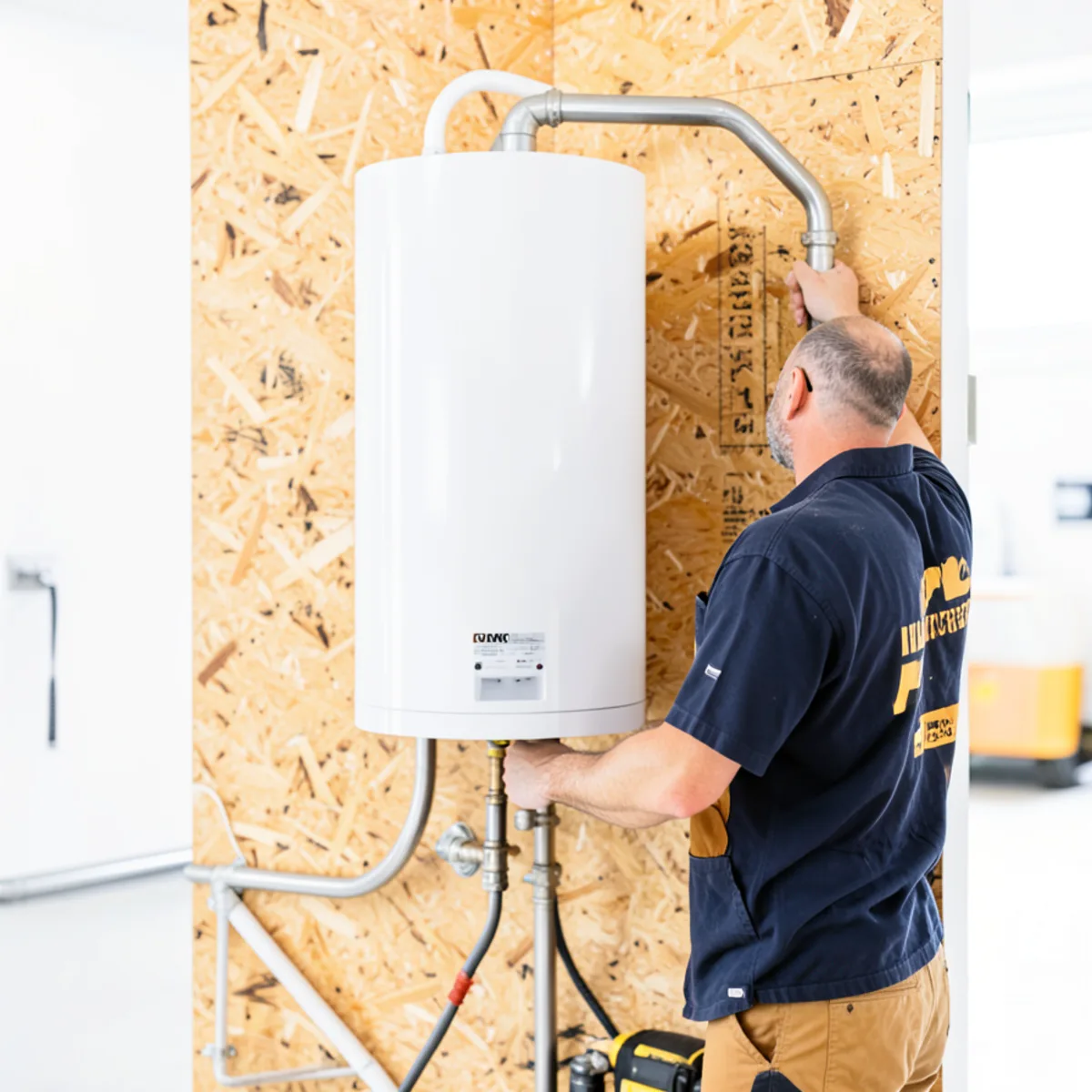
Wall-mounted tankless water heater installation

Brass temperature and pressure relief valve
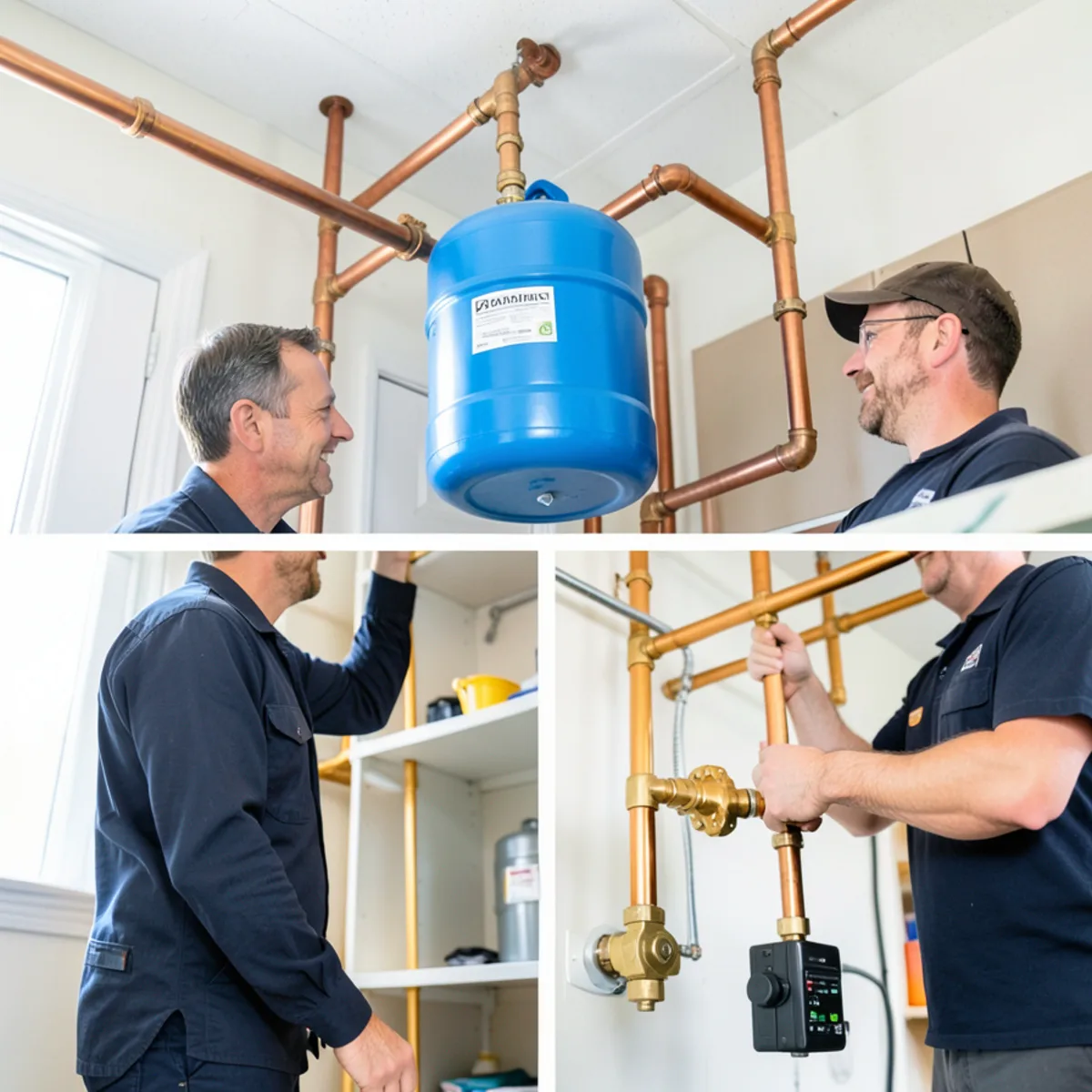
Potable water thermal expansion tank installed above water heater
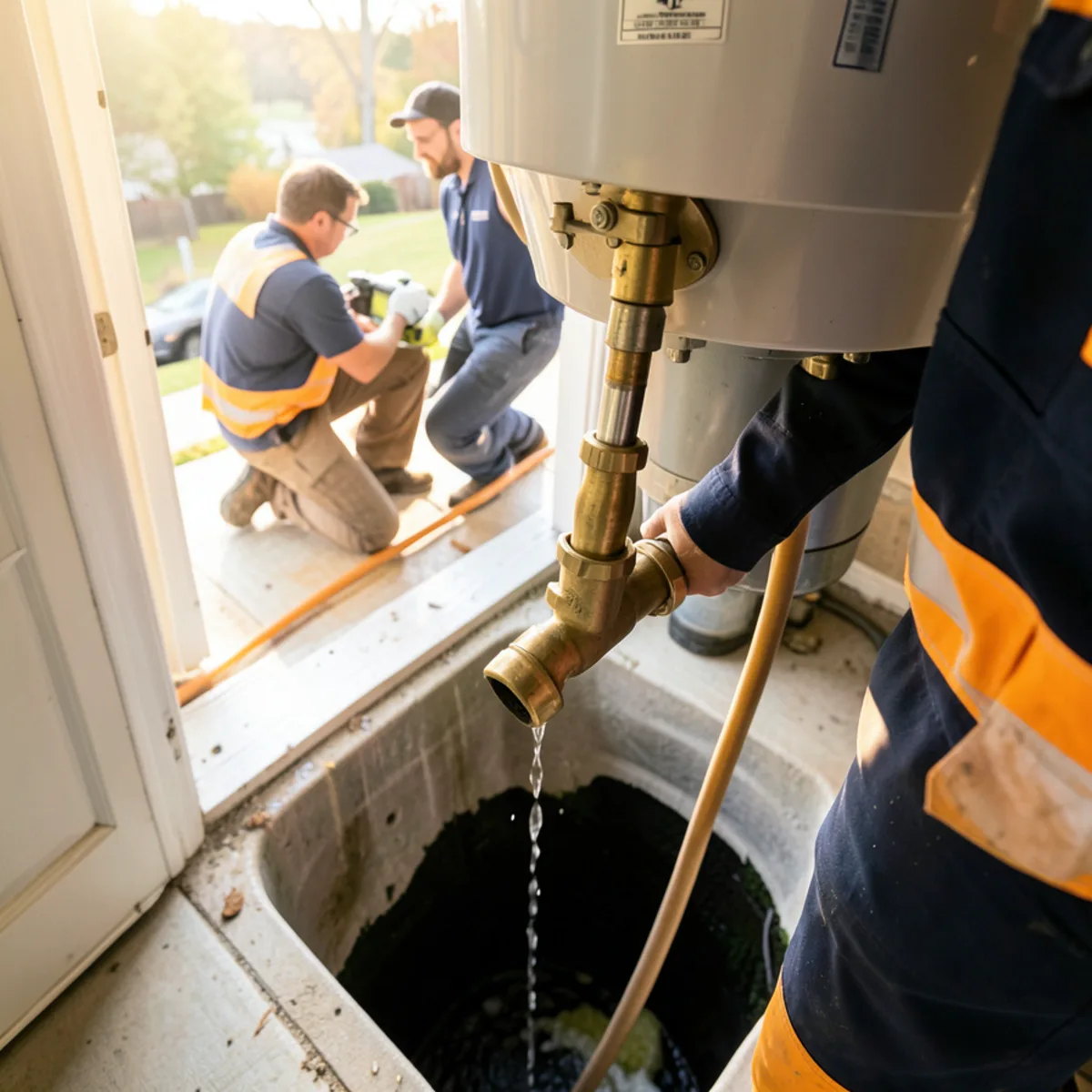
Annual sediment flush through brass water heater drain valve
Where We Connect Water Heater Repair & Replacement Calls
Independent contractors taking calls for water heater repair & replacement dispatch promptly across the following primary Greater Hartford towns:
Water Heater Repair & Replacement FAQs
Answers to common questions regarding diagnostic methods, pricing factors, and service timelines.
A direct swap of a standard 40- or 50-gallon atmospheric gas or electric water heater typically takes 2.5 to 4 hours. Converting from an old storage tank to a wall-mounted tankless on-demand system requiring new gas lines and side-wall PVC venting takes approximately 6 to 8 hours.