
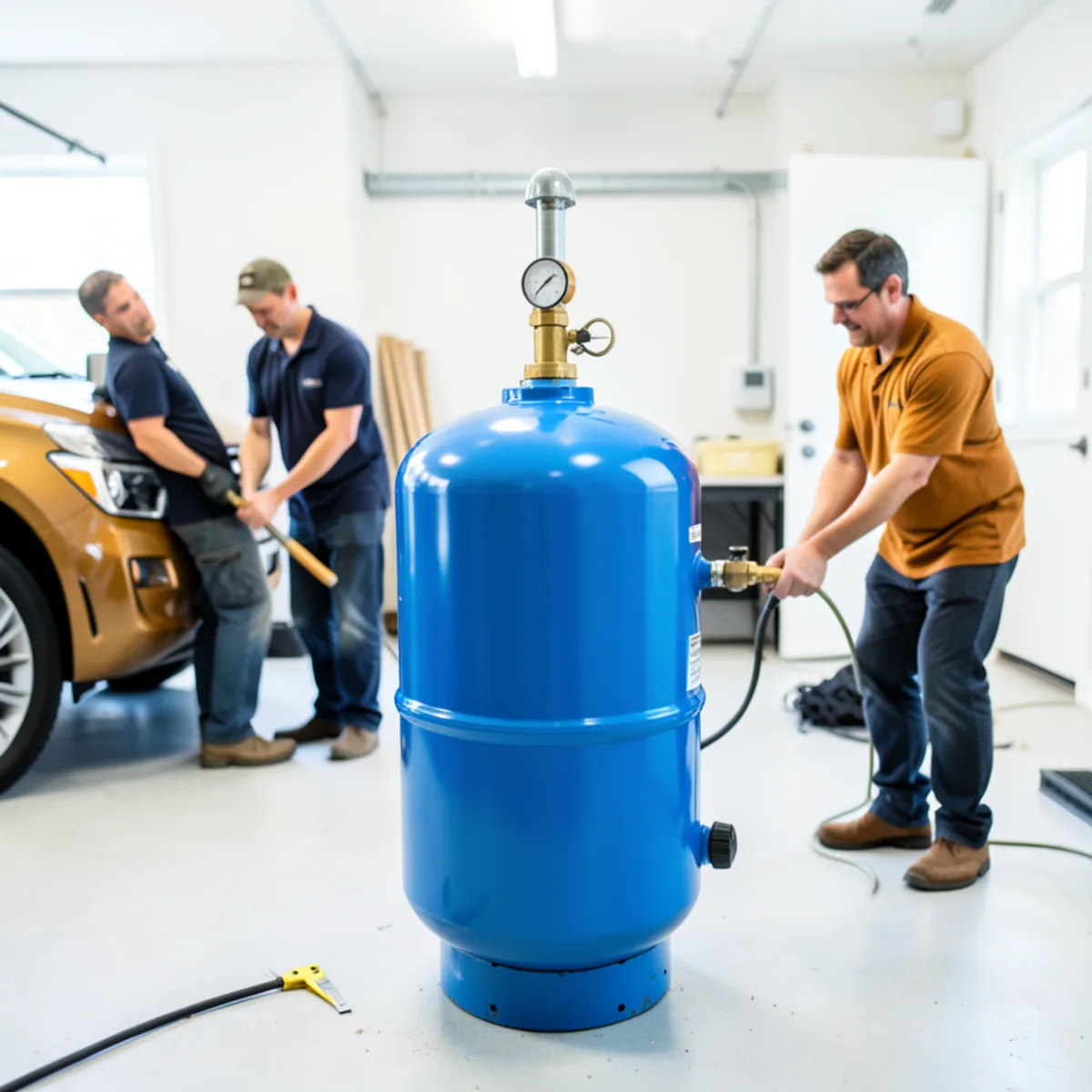
While central Glastonbury receives public reservoir water from the MDC, hundreds of single-family residences in South Glastonbury, East Glastonbury, and around Kongscut Mountain depend on private bedrock wells. When your well system malfunctions, water pressure drops, faucets sputter, and showers become frustrating trickles.
How a Residential Well Water System Operates
A private well setup consists of three core components working in harmony: a submersible pump suspended hundreds of feet underground in bedrock, a captive-air pressure tank in your basement, and an electromechanical pressure switch. The pressure tank holds a volume of water separated from compressed air by a flexible rubber bladder. When you open a faucet, compressed air forces water through your domestic pipes without requiring the pump to start immediately. When line pressure drops to the cut-in threshold (typically 30 or 40 PSI), the pressure switch engages the well pump to replenish the tank.
Common Causes of Low Well Pressure in Glastonbury
When well water pressure plummets, independent technicians check these primary failure points:
- Waterlogged Bladder Pressure Tank: Over time, the internal rubber diaphragm ruptures or degrades. The air cushion dissolves into the water, filling the tank completely with solid liquid. Without an air cushion, the well pump short-cycles violently every time a tap opens, causing rapid water pulsing and premature motor burnout.
- Clogged Whole-House Sediment Filters: Bedrock wells in eastern Connecticut frequently draw fine sand, silt, and oxidized iron particles. A 10-inch or 20-inch cartridge sediment filter that has not been changed in six months becomes a severe flow bottleneck.
- Pitted or Corroded Pressure Switch Contacts: Insects, moisture, and electrical arcing corrode the silver electrical contact points inside the pressure switch box, preventing electrical current from reaching the pump motor.
- Underground Water Line Leak: A cracked polyethylene supply pipe between the wellhead casing outdoors and your foundation leaks water into the ground, causing the well pump to run continuously even when no water is running in the house.
Need Urgent Plumbing Assistance in Greater Hartford?
Connect with an independent local pro ready to dispatch across Glastonbury, East Hartford, Manchester, and surrounding towns. Free to call with upfront written estimates.
Testing Your Well Pressure Tank at Home
You can perform a quick diagnostic check on your pressure tank using a standard tire pressure gauge:
- 1Shut off power to the well pump at your electrical breaker box.
- 2Open a basement sink faucet completely to drain all standing water from the pressure tank until the pressure gauge reads 0 PSI.
- 3Locate the Schrader air valve (identical to a car tire valve) on the top dome of the pressure tank.
- 4Press your tire gauge onto the valve stem. The air pressure reading should be exactly 2 PSI below the cut-in pressure of your switch (e.g., 28 PSI for a 30/50 switch, or 38 PSI for a 40/60 switch).
- 5If water squirts out of the air valve when pressed, the internal rubber bladder has failed and the tank must be replaced.
How Private Drilled Well Water Systems Operate
In the rural and hilly sections of Glastonbury—including Hopewell, Buckingham, and South Glastonbury—homes rely on private drilled artesian wells tapping deep bedrock aquifers. A typical well system consists of four primary components: a deep-well submersible pump suspended hundreds of feet down the steel well casing, an underground pitless adapter carrying water below the frost line into the basement, a captive-air pressure tank maintaining household pressure, and an electro-mechanical pressure switch that automatically cycles the pump on and off.
Diagnosing Common Well Water Pressure Problems
Naturally Occurring Minerals & Water Testing in Glastonbury
The Town of Glastonbury and the Connecticut Council on Environmental Quality (CEQ) have documented naturally occurring uranium and radon minerals in bedrock aquifers within specific geological formations in eastern Glastonbury. Property owners with private wells should perform comprehensive laboratory water quality testing every three to five years to check for pH balance, hardness, coliform bacteria, nitrates, and heavy metals. Installing appropriate filtration protects household plumbing fixtures from mineral scale and acid corrosion.
Constant-Pressure Variable Frequency Drive (VFD) Upgrades
For well owners in Glastonbury and Portland frustrated by fluctuating water pressure—such as showers turning weak when a washing machine fills or lawn irrigation starts—modern variable frequency drive (VFD) constant-pressure controllers offer a transformative upgrade. Traditional well systems fluctuate between 30 PSI (cut-in) and 50 PSI (cut-off). A VFD controller continuously monitors line pressure with an electronic pressure transducer, varying the electric motor speed of the submersible pump to maintain a rock-solid, constant 55 to 60 PSI regardless of how many fixtures operate simultaneously.
Seasonal Well Water Testing Recommendations in Connecticut
The Connecticut Department of Public Health recommends that all private well owners test their water supply at least once per year for total coliform bacteria, nitrates, pH, and turbidity. In Glastonbury, testing for heavy metals and naturally occurring uranium ensures your drinking water is pure and verifies that low water pressure is not being caused by mineral scaling inside water filtration cartridges or well pump check valves.
Well Water Pressure Troubleshooting Matrix for Homeowners
When water flow behaves erratically in a private well home, diagnostic indicators pinpoint whether the mechanical failure lies in the basement tank, the electrical switch, or the subterranean pump:
| Observed Symptom | Likely Mechanical Cause | Technical Verification | Professional Solution |
|---|---|---|---|
| Rapid water pulsing at faucets | Waterlogged captive-air tank | Press Schrader air valve; water squirts out | Replace bladder tank; pre-charge air to 2 PSI below switch cut-in |
| Gradual volume drop across all taps | Clogged sediment filter cartridge | Check pressure gauge differential across filter | Replace 5-micron spun polypropylene cartridge; install dual-stage filter |
| Pressure switch clicks rapidly; pump hums | Burned/pitted silver contact points | Visual check of charred electrical contacts | Replace 30/50 or 40/60 PSI switch; check pump start capacitor |
| Air sputtering violently from faucets | Aquifer drawdown or pitless leak | Observe water level during prolonged flow | Test well recovery rate; inspect subterranean pitless O-ring seal |
| Pump runs continuously without water use | Underground supply line breach | Pressure drops with main valve closed | Locate underground leak; pull new seamless poly line below frost depth |
Expert Field Insight: Bladder Tank Sizing vs. Constant-Pressure VFD Upgrades
When replacing a failing well tank in Glastonbury or Portland, homeowners face a fundamental architectural choice: install a standard pre-pressurized diaphragm tank (such as an Amtrol Well-X-Trol) or upgrade to an electronic Variable Frequency Drive (VFD) constant-pressure controller. A conventional bladder tank functions on a mechanical 20 PSI differential (cycling between 40 PSI cut-in and 60 PSI cut-out). To minimize pump cycling and extend subterranean motor life, contractors recommend sizing tanks with at least a 30- to 44-gallon total volume. While reliable and cost-effective, homeowners must accept that shower pressure will naturally rise and fall as the tank cycles.
In contrast, a modern VFD constant-pressure system replaces the large tank with a compact 2-to-4-gallon buffer tank and a digital motor speed controller. An electronic pressure transducer measures line pressure hundreds of times per second, modulating the electric motor frequency (from 30 Hz to 60 Hz) so the pump spins only as fast as needed to match real-time fixture demand. This delivers unwavering, municipal-style 55 to 60 PSI water pressure regardless of whether one faucet or three showers and a washing machine run at once. Trade-offs include higher upfront equipment cost ($1,800 to $2,800 installed) and the requirement for dedicated whole-house electrical surge protection to guard sensitive controller circuitry against lightning strikes on Connecticut ridges.
Private Well Permitting & Licensure Under Connecticut DCP
In the State of Connecticut, servicing private artesian well systems is strictly governed by the Department of Consumer Protection (DCP) and the State Plumbing and Piping Work Examining Board. Only contractors holding valid P-1 (Unlimited Contractor) or J-1 (Limited Well Pump Contractor) credentials are legally authorized to install or alter well pumps, pitless adapters, and pressure tank manifolds. Homeowners can check historic well drilling records—including original depth to bedrock, static water table level, and tested gallons per minute (GPM) yield—by contacting the Glastonbury Health Department or looking up their property address through CT DCP and DPH archives.
Visual Field Reference & Diagnostic Guides
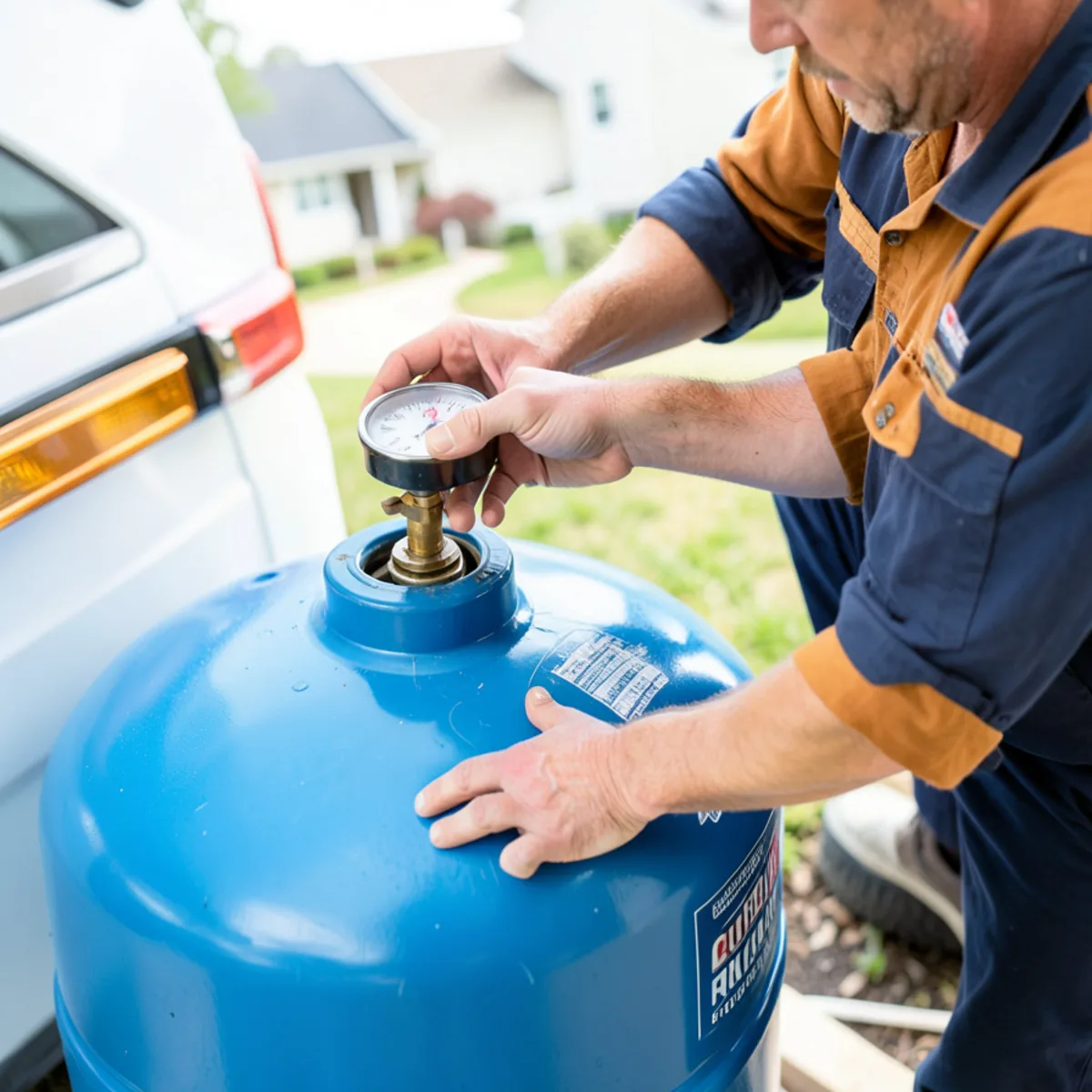
Checking air pressure pre-charge on well tank Schrader valve
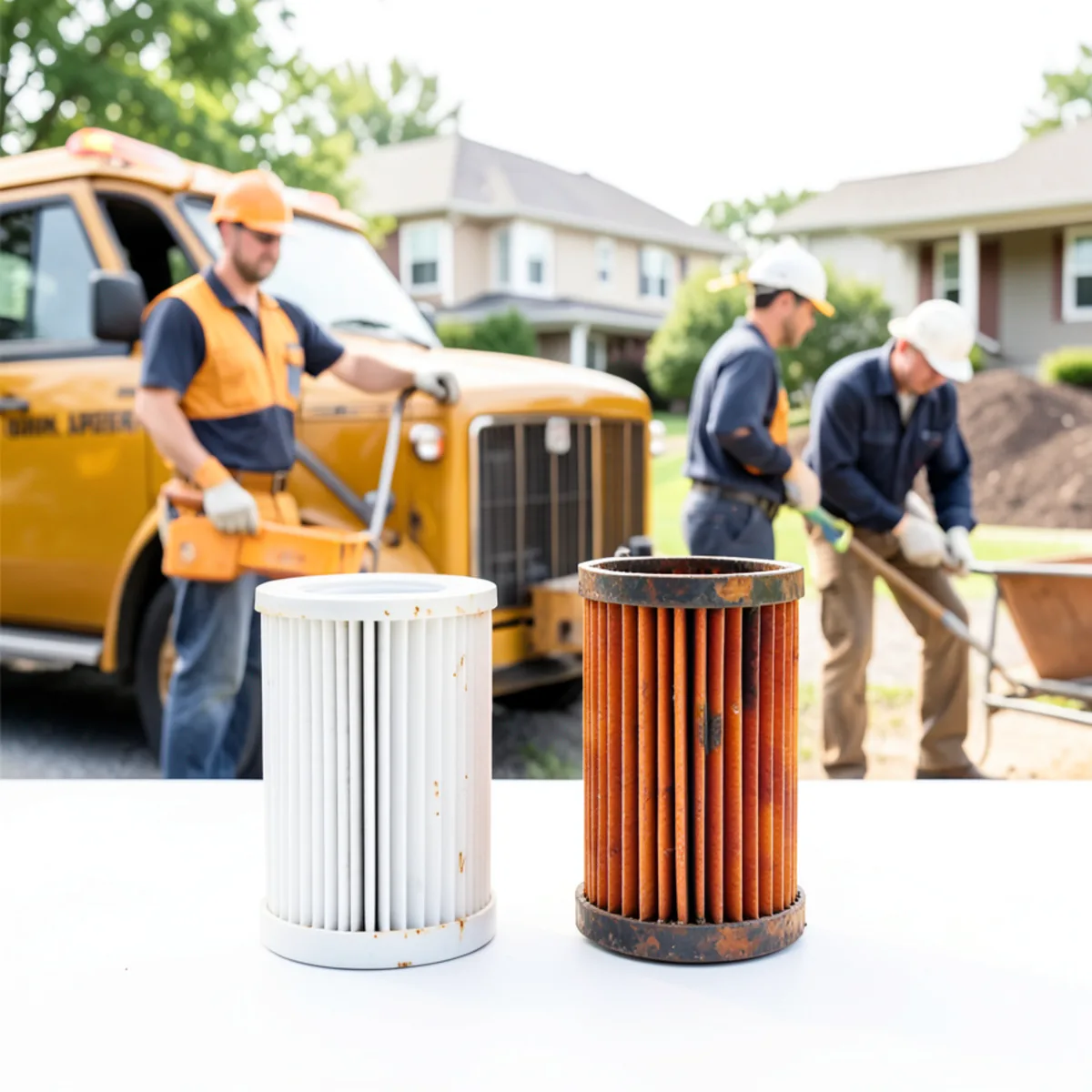
Comparison between new white sediment filter and stained used cartridge
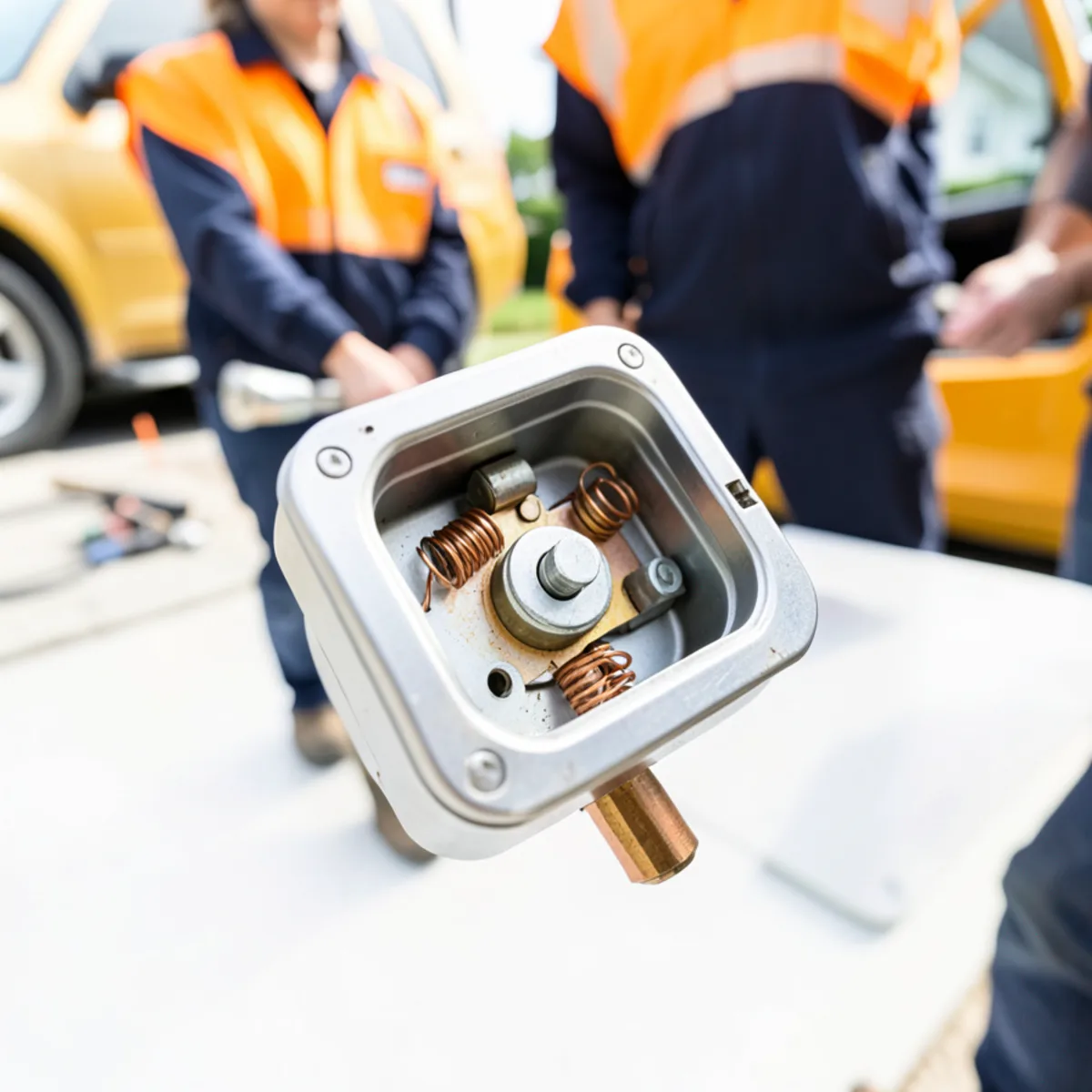
Close-up of electrical contacts inside well pressure switch
Cited References & Regulatory Authorities
Article FAQs
Direct answers to common questions addressed in this guide.
Quality bladder-style well pressure tanks typically last between 8 and 12 years. High mineral content in bedrock water and frequent pump cycling can shorten bladder lifespan.